
The safest approach is simple: inspect equipment before use, follow product ratings, avoid overloading circuits, and take recurring electrical warning signs seriously.
That matters in New England homes, where older wiring layouts are common and outdoor decorations may be exposed to rain, snow, and coastal moisture in some communities. GEM offers a variety of electrical services and can inspect your home’s electrical system prior to the holiday season.
What should you check before holiday power use increases?
Start with every decoration, cord, outlet, and portable device you plan to use.
Inspect:
- light strings;
- extension cords;
- plugs and sockets;
- power strips;
- outdoor receptacles;
- countertop appliances; and
- portable space heaters.
Look for:
- frayed insulation;
- cracked or broken sockets;
- loose connections;
- exposed wire;
- scorch marks or discoloration; or
- equipment that is not rated for where you plan to use it.
Also check product labels. Indoor-only lights and cords should remain indoors.
How can you avoid overloaded outlets and circuits?
Follow the electrical ratings on lights, cords, strips, appliances, and connected equipment.
A power strip gives you more places to plug things in, but it does not increase the capacity of the circuit serving the outlet.
Good habits include:
- Follow manufacturer connection limits.
- Do not daisy-chain extension cords.
- Spread electrical demand appropriately when the home’s system allows it.
- Stop adding load if a breaker repeatedly trips.
- Unplug equipment if a plug or outlet becomes unusually warm.
Warning signs that a circuit or connection may need attention include:
- repeated breaker trips;
- warm outlets or switches;
- buzzing, crackling, or sizzling;
- scorch marks;
- loose plugs;
- visible wiring damage; or
- a burning odor.
Do not keep resetting a breaker and adding more load.
How should holiday lights and extension cords be used safely?
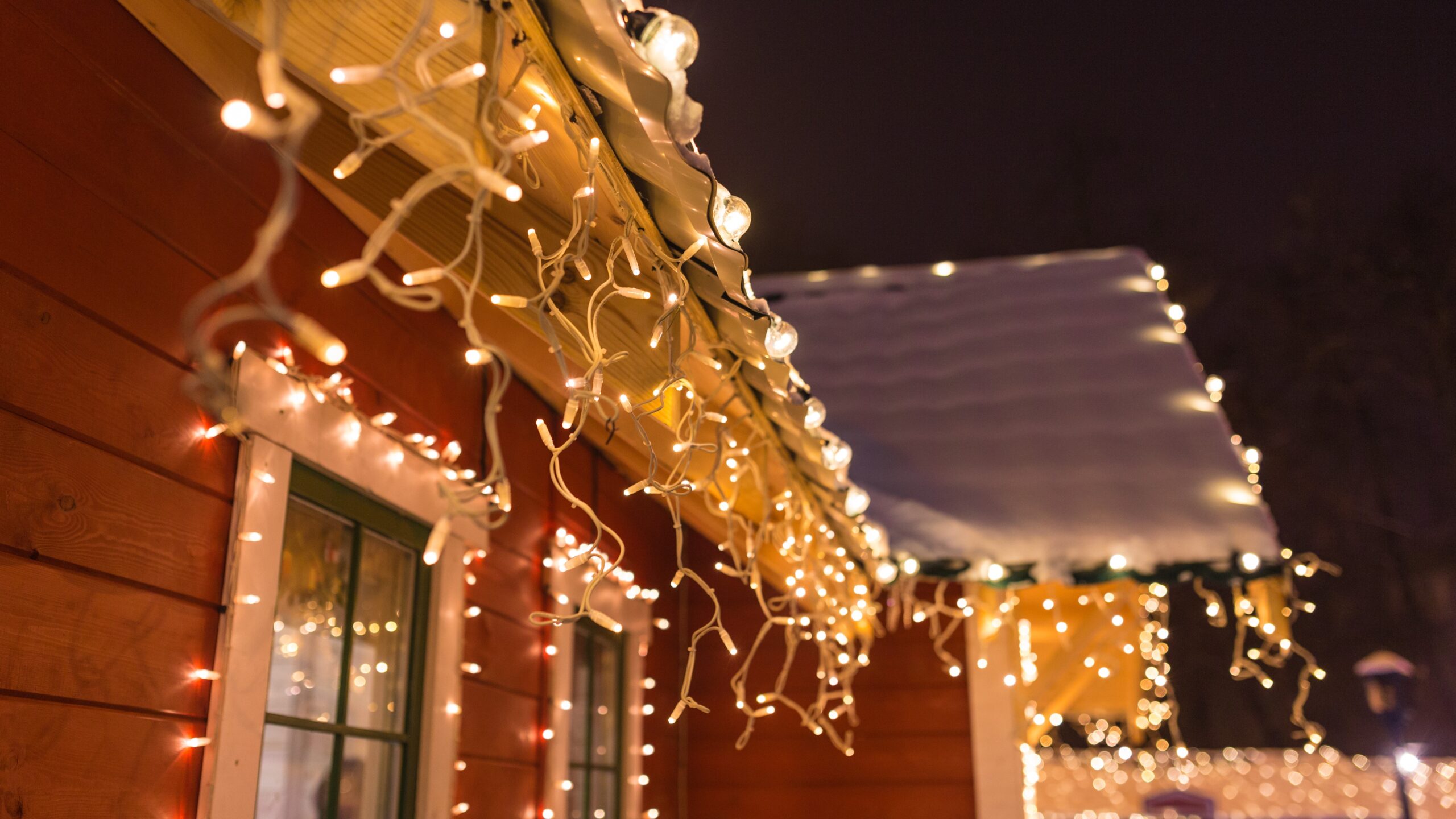
Use lights and cords according to their ratings, and treat extension cords as temporary equipment.
For holiday lights:
- inspect sets before installation;
- replace products with damaged cords or sockets;
- follow manufacturer limits for connected strings;
- use outdoor-rated products outdoors; and
- turn decorations off when leaving the home or going to sleep.
For extension cords:
- match the cord rating to the equipment;
- use outdoor-rated cords outside;
- do not connect cords together;
- keep cords out from under rugs and furniture;
- avoid pinching them in doors or windows;
- never remove the grounding pin; and
- replace damaged cords rather than taping over worn insulation.
There is no useful universal answer to how many holiday light strands can be connected together. Safe limits depend on the specific product, wattage, built-in protection, manufacturer instructions, and the circuit serving the area.
If the same room depends on temporary cords every holiday season, a permanent electrical solution may be worth considering.
If holiday decorating repeatedly exposes a lack of usable outlets or circuit capacity, review GEM’s electrical installation options
What should you know about outdoor holiday decorations?
Outdoor decorations should be designed for outdoor use and connected through appropriate GFCI protection. A ground-fault circuit interrupter, or GFCI, is designed to interrupt power when it detects certain current imbalances that can indicate a shock hazard. They are the specialized outlets in your bathroom, kitchen, or outside walls that feature the “Test” and “Reset” buttons right in the middle.
Outside:
- use lights and cords marked for outdoor use;
- keep connections away from standing water;
- protect cords from doors, windows, and sharp edges;
- inspect equipment after severe weather; and
- follow manufacturer connection limits.
That can be especially relevant in Rhode Island and Massachusetts coastal communities where winter decorations may face wet conditions before or during freezing weather.
Can space heaters use extension cords or power strips?
No. Portable space heaters should plug directly into an appropriate wall receptacle.
The Electrical Safety Foundation International (ESFI) warns that extension cords and power strips can overheat when used with space heaters.
Also:
- keep heaters at least three feet from combustible materials;
- place them on a stable, level surface;
- follow the manufacturer’s instructions;
- turn them off when leaving the room; and
- do not operate them while sleeping.
Holiday guests may mean more rooms are in use, but temporary cords should not become the solution for inadequate permanent wiring.
What electrical habits matter during holiday cooking?
Keep countertop appliances away from water, hot surfaces, and crowded temporary power setups.
Holiday kitchens may use several appliances at once, including mixers, slow cookers, coffee makers, and warming equipment. ESFI recommends unplugging countertop appliances when they are not in use and keeping combustible material away from cooking equipment.
Avoid:
- cords crossing sinks;
- extension-cord chains;
- overloaded strips; and
- temporary setups that create trip hazards.
The main goal is to avoid adding unnecessary electrical strain to an already busy area of the home.
When should you call an electrician?
Recurring problems involving heat, breaker trips, damaged wiring, or unusual electrical behavior should be evaluated rather than worked around.
Call for professional service when you notice:
- breakers that repeatedly trip;
- warm outlets or switches;
- buzzing, crackling, or sizzling;
- loose plugs or receptacles;
- visible wiring damage;
- repeated dimming or flickering under load;
- heavy reliance on temporary cords; or
- a need for new circuits, outlets, or panel work.
Safety note: If there is active smoke, fire, or dangerous sparking, move away from the hazard and contact emergency services as appropriate rather than continuing to troubleshoot.
When does a repair or electrical upgrade make sense?
A focused electrical repair may be enough when the problem is isolated and the electrical system otherwise meets the home’s needs.
A broader upgrade may deserve consideration when the concern points to:
- inadequate circuit capacity;
- panel limitations;
- aging or damaged wiring;
- too few permanent receptacles;
- outdated or missing protective devices; or
- repeated dependence on extension cords.
Permanent electrical work begins with evaluating the existing system and the load the home needs to support.
Depending on the project, an electrician may review:
- circuit capacity;
- outlet locations;
- GFCI or AFCI protection;
- wiring condition;
- panel capacity;
- grounding; and
- the equipment being added.
Older homes in established Rhode Island and Massachusetts communities may also have electrical systems that were updated in stages over many years. That makes an actual inspection more useful than assuming every outlet shortage needs the same upgrade.
Should damaged electrical equipment be repaired or replaced?
Damaged seasonal decorations with exposed wiring, cracked sockets, or other visible electrical damage should be removed from service rather than improvised back into use.
Permanent household electrical components require a different decision.
Repair versus replacement may depend on:
- the component involved;
- type and extent of damage;
- wiring condition;
- circuit capacity;
- code requirements; and
- accessibility.
What affects electrical service cost?
Electrical cost depends on the scope of work, existing conditions, and how much permanent work is required.
Potential cost drivers include:
- replacing one outlet versus adding a circuit;
- wiring access;
- number of devices;
- GFCI or AFCI requirements;
- panel capacity;
- troubleshooting time;
- permits or inspections where applicable; and
- installation complexity.
What should be on your holiday electrical safety checklist?
Keep the final review short.
Lights and Decorations
- Inspect cords and sockets.
- Remove damaged equipment.
- Follow manufacturer connection limits.
- Turn decorations off when unattended.
Extension Cords
- Match the cord to the load.
- Keep cords temporary.
- Use outdoor-rated cords outside.
- Do not run cords under rugs or furniture.
Outdoor Power
- Use appropriate GFCI protection.
- Keep connections away from standing water.
- Protect cords from physical damage.
Space Heaters
- Plug directly into wall receptacles.
- Keep combustible materials at a safe distance.
- Turn heaters off when unattended.
Home Electrical System
- Do not ignore repeated breaker trips.
- Watch for warm outlets, buzzing, or damaged wiring.
- Have recurring problems professionally evaluated.
Holiday decorations should work within your home’s electrical capacity rather than depend on temporary fixes.
If holiday power use reveals recurring breaker, outlet, or wiring problems, schedule electrical service with GEM today
Frequently Asked Questions
How can I avoid overloaded circuits during the holidays?
Homeowners can reduce holiday circuit overload by limiting how many devices share an outlet and following each product’s electrical rating. A power strip provides more receptacles but does not add circuit capacity. Repeated breaker trips are a sign to stop adding load and have the problem evaluated.
What are signs of an overloaded outlet or electrical problem?
Signs of a holiday electrical problem include warm outlets, recurring breaker trips, buzzing, crackling, sparking or visible damage. ESFI specifically identifies warm switches or outlets and unusual electrical sounds as warning signs.
Are extension cords safe for holiday decorations?
Extension cords can be used for holiday decorations when they are undamaged, properly rated and used temporarily. Do not connect multiple extension cords together, run them under rugs or furniture, or pinch them in doors or windows.
Should outdoor holiday lights use GFCI protection?
Outdoor holiday lights should connect to GFCI-protected circuits and use equipment rated for outdoor conditions. ESFI both recommends GFCI protection for outdoor seasonal lighting. New England rain, snow and coastal moisture make correct outdoor ratings especially important.
Can a space heater be plugged into a power strip?
A space heater should plug directly into a wall outlet rather than an extension cord or power strip. ESFI warns that cords and strips can overheat when used with heaters. Keep the heater at least three feet from items that can burn.
Should holiday lights be turned off overnight?
Holiday electrical decorations should be turned off before leaving home or going to sleep. ESFI includes this recommendation in their holiday safety guidance.
When should I call an electrician during the holidays?
Call an electrician when repeated breaker trips, warm outlets, damaged permanent wiring, sparking or other electrical problems continue after holiday equipment is disconnected. GEM provides residential electrical repair and installation in Rhode Island and Southeast Massachusetts.