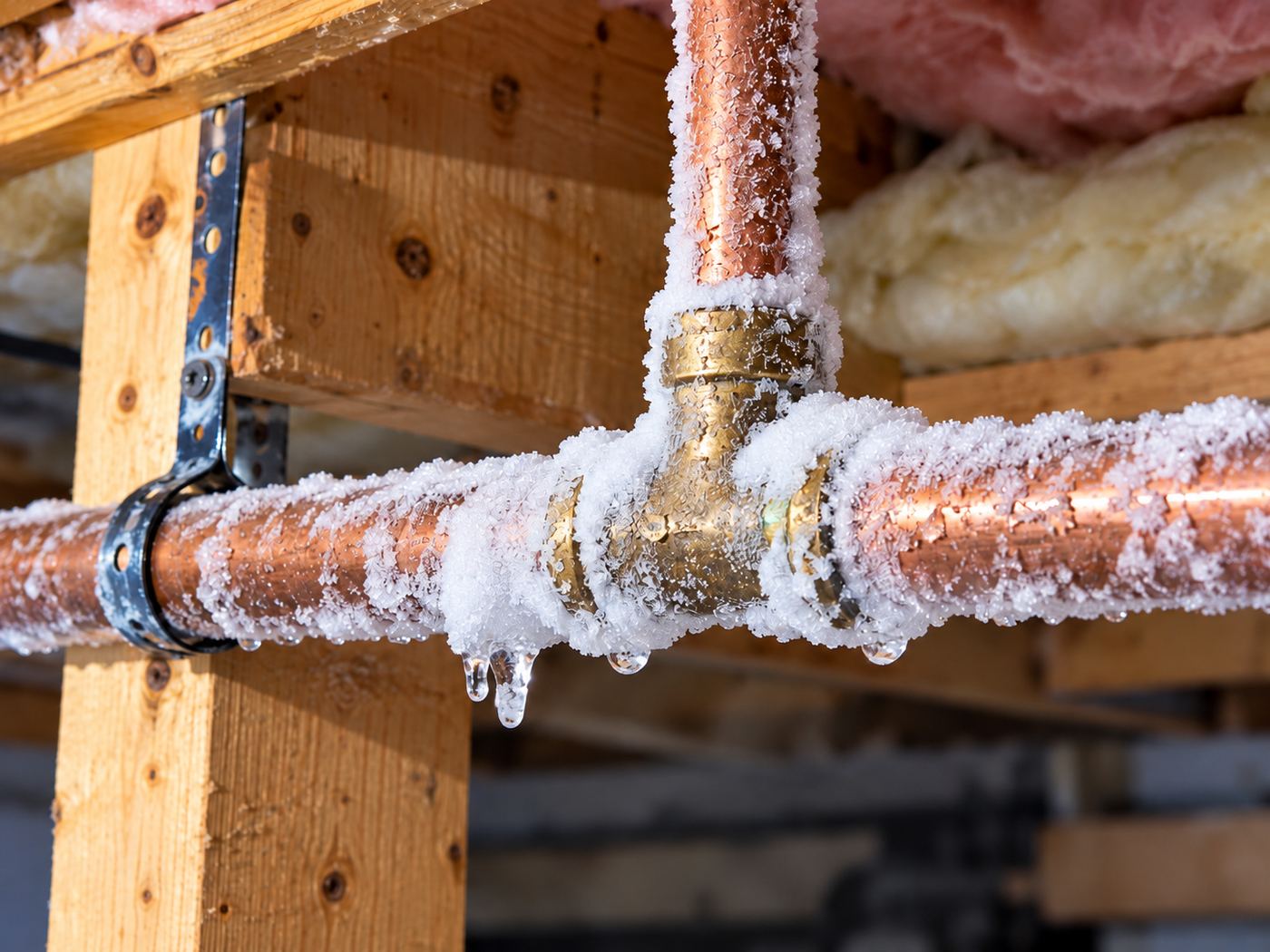

Pipes can burst in winter because water expands when it freezes. That expansion creates pressure inside plumbing, and enough pressure can eventually crack or break metal or plastic pipe.
The greatest risk is usually plumbing that runs through cold or poorly insulated areas: basements, crawl spaces, attics, garages, cabinets, and exterior walls.
That matters across Rhode Island and Massachusetts, where freezing temperatures can expose weak points in plumbing during the winter. Frozen pipes are a common New England plumbing problem.
Several practical steps can lower the chance of a frozen or burst pipe before the next cold snap.
Why does freezing water make pipes burst?
Water expands when it freezes, but a pipe does not always split exactly where the ice first forms.
As ice develops inside a line, pressure can increase between the blockage and another closed point in the plumbing. Eventually, that pressure can damage the pipe. That means pipe material alone does not determine whether a line can freeze.
A better winter question is: Where does your plumbing run through areas that get cold?
Those locations deserve attention before temperatures stay below freezing.
Which pipes are most likely to freeze?
Pipes in unheated or poorly insulated areas are usually the most vulnerable.
Several common risk locations include:
- basements and crawl spaces;
- attics;
- garages;
- kitchen and bathroom cabinets;
- exterior walls with limited insulation;
- outdoor hose connections and other exposed lines.
That is useful context for New England homes, where basements, older utility layouts, garages, additions, and mixed-age plumbing are common.
Walk through the home before severe cold and look for visible water lines near foundation walls, exterior surfaces, garage areas, or other spaces that stay noticeably colder than the main living area.
If a particular line has frozen before, consider that history an important warning sign.
GEM can help identify vulnerable areas that may benefit from insulation or another plumbing improvement. Schedule an inspection today.
How can you prevent pipes from freezing?
The goal is to keep vulnerable plumbing warmer and reduce prolonged exposure to freezing conditions.
Before cold weather, remove and drain outdoor hoses, protect exposed plumbing, insulate pipes in unheated areas, and check water lines in places such as garages and cabinets.
During severe cold:
- Keep garage doors closed if water lines run through the garage.
- Open kitchen and bathroom cabinet doors so warmer room air can reach plumbing.
- Let cold water drip from a faucet served by an exposed pipe.
- Avoid sharply lowering the thermostat overnight.
- Keep heat on when you are away.
The Red Cross recommends leaving a home at no lower than 55°F when it’s unoccupied during cold weather.
A dripping faucet is a temporary cold weather precaution, not a permanent fix for plumbing that freezes repeatedly.
If the same line becomes vulnerable every winter, review the underlying cause instead of relying on the same workaround each time.
Does pipe insulation help prevent freezing?
Pipe insulation can help vulnerable plumbing retain more heat, especially in colder basements, crawl spaces, garages, and attics.
The Red Cross recommends insulating exposed hot and cold water lines and identifies products such as pipe sleeves and heat cable or heat tape as possible protective options when appropriate.
The correct solution depends on where the pipe runs and why it is becoming cold.
Sometimes insulation is enough. In other cases, a pipe may need better protection from drafts or a different routing solution.
If the right approach is unclear, review your options with a GEM plumber rather than applying a temporary fix without understanding the exposure.
How can you tell if a pipe is already frozen?
Reduced water flow or no water at a fixture during freezing weather can signal a frozen pipe.
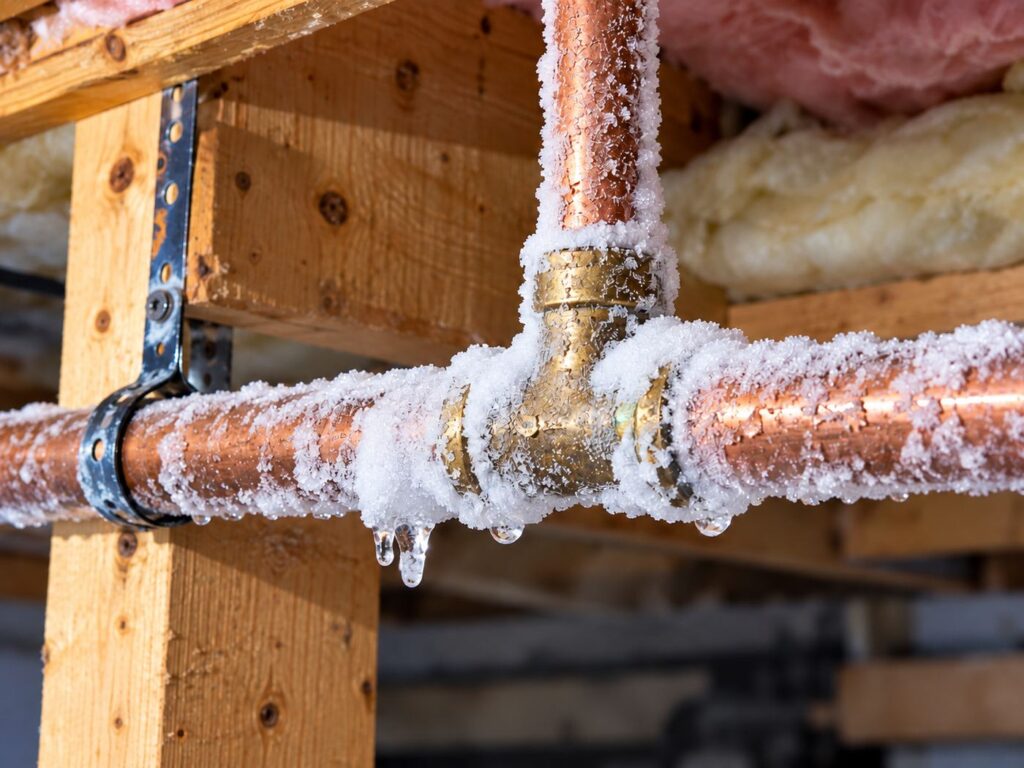
It’s safe to suspect a frozen line when a faucet produces only a trickle. Other signs include reduced water flow, frost on exposed piping, and no water at all.
The pipe may be vulnerable near an exterior wall or where the water service enters the home.
If you suspect freezing, also check other faucets. The same cold conditions can affect more than one line.
Know where the main water shutoff is before thawing begins. A pipe may already be cracked, and water can start leaking once the ice melts.
How should you thaw a frozen pipe safely?
Use gentle heat and never use an open flame.
Keep the affected faucet open and apply controlled heat with methods such as:
- an electric heating pad;
- a hair dryer;
- towels soaked in hot water;
- another appropriate controlled heat source.
Do not use a blowtorch, kerosene or propane heater, charcoal stove, or another open flame device.
Continue applying heat until normal water pressure returns.
Call a licensed plumber when:
- you cannot locate the frozen section;
- the pipe is inaccessible;
- you cannot thaw it safely;
- you see a split, crack, or leak;
- water begins escaping.
What should you do if a pipe bursts?
Shut off the water supply when it is safe to do so and protect yourself from any electrical hazard around the leak.
A burst pipe can release water quickly once an ice blockage melts or normal pressure reaches the damaged section.
Do not enter standing water if energized electrical equipment, outlets, appliances, or wiring may be involved.
After the flow is controlled, the damaged section will need repair before normal plumbing operation resumes.
Just as important, identify why that location froze. Otherwise, the same pipe may remain vulnerable during the next prolonged cold period.
For significant active leaks or other urgent plumbing conditions, GEM provides 24/7 emergency plumbing service.
What should Rhode Island and Massachusetts homeowners check before extreme cold?
Start with the parts of the plumbing system that experience the lowest temperatures.
A quick winter check should answer five questions:
- Are outdoor hoses disconnected and drained?
- Are exposed water lines insulated where appropriate?
- Do pipes run through a garage, crawl space, basement, attic, or exterior wall?
- Do you know where the main water shutoff is?
- Has any section of plumbing frozen before?
Rhode Island and Massachusetts homes vary widely in age and layout. One property may have vulnerable basement piping, while another has plumbing running through a garage or addition.
That’s why a simple walkthrough of your own home is more useful than assuming every pipe has the same risk.
If a pipe freezes repeatedly, leaks after thawing, or runs through an area you cannot safely access, schedule plumbing service with GEM to before the next stretch of severe cold
Frequently Asked Questions
Why do pipes burst in winter?
Pipes can burst in winter because water expands when it freezes, creating pressure inside the plumbing. That pressure can become strong enough to break metal or plastic pipe.
Pipes in colder, unheated parts of the home are generally more vulnerable, so prevention focuses on limiting freezing in the first place.
Which pipes are most likely to freeze?
Pipes in unheated or poorly insulated areas are especially vulnerable to freezing. Basements, crawl spaces, attics, garages, cabinets, outdoor lines, and plumbing along exterior walls are common risk areas.
Rhode Island and Massachusetts homeowners should pay particular attention to lines in parts of the house that stay much colder than normal living areas.
Should I let my faucet drip during freezing weather?
A small cold water trickle can help protect exposed plumbing during very cold weather. Let cold water drip from a faucet served by vulnerable piping because moving water can help reduce freezing risk.
This is a temporary cold weather precaution rather than a long-term solution for pipes that freeze every winter.
What temperature should I leave my home at during winter travel?
Keep the heat on and set the thermostat no lower than 55°F when you are away during cold weather. That helps keep vulnerable plumbing warmer, but exposed lines in especially cold areas may still need insulation or another form of protection.
How can I tell if a pipe is frozen?
A frozen pipe may cause reduced water flow, a trickle at the faucet, or no water during freezing conditions. Frost on exposed piping is also a possible warning sign.
If one line is frozen, check other faucets because the same cold conditions may affect additional plumbing.
Can I use a torch to thaw a frozen pipe?
An open flame should never be used to thaw a frozen pipe. Do not use blowtorches, kerosene or propane heaters, charcoal stoves, or other open flame devices.
Safer options include controlled electric heat or hot towels on an accessible pipe. If you cannot reach or safely thaw the line, call a licensed plumber.
What should I do if a frozen pipe starts leaking?
A leaking frozen pipe needs prompt attention. Shut off the water supply when it is safe to do so and avoid standing water if electrical wiring, outlets, or equipment may be involved.
Once the water is controlled, the damaged section needs repair before normal service resumes. The reason the pipe froze should also be addressed so the same location remains less vulnerable.
Does pipe insulation prevent frozen pipes?
Pipe insulation can reduce freezing risk by helping exposed plumbing retain heat, but it cannot guarantee that a pipe will never freeze. The Red Cross recommends insulating exposed water lines and identifies pipe sleeves and properly listed heating products as possible options.
Repeated freezing may signal that the pipe needs a more permanent change in protection or routing.