
If your AC is leaking water, a clogged condensate drain line may be the cause. This is usually an HVAC issue, not a general plumbing drain issue, because the condensate drain is part of the air conditioning system’s moisture-removal process.
During cooling, your AC pulls moisture from indoor air. That moisture becomes condensation and needs a clear path away from the indoor equipment. When the drain line clogs, water can back up into the pan, leak near the air handler, or shut the system down.
In Rhode Island and Massachusetts, humid New England summers can make this problem easier to spot. Hot, humid New England summers call for dependable air conditioning, and GEM offers AC services across Rhode Island and Massachusetts.
What Causes a Drain Line Clog?
A clogged AC drain line usually starts with everyday buildup.
The most common causes include:
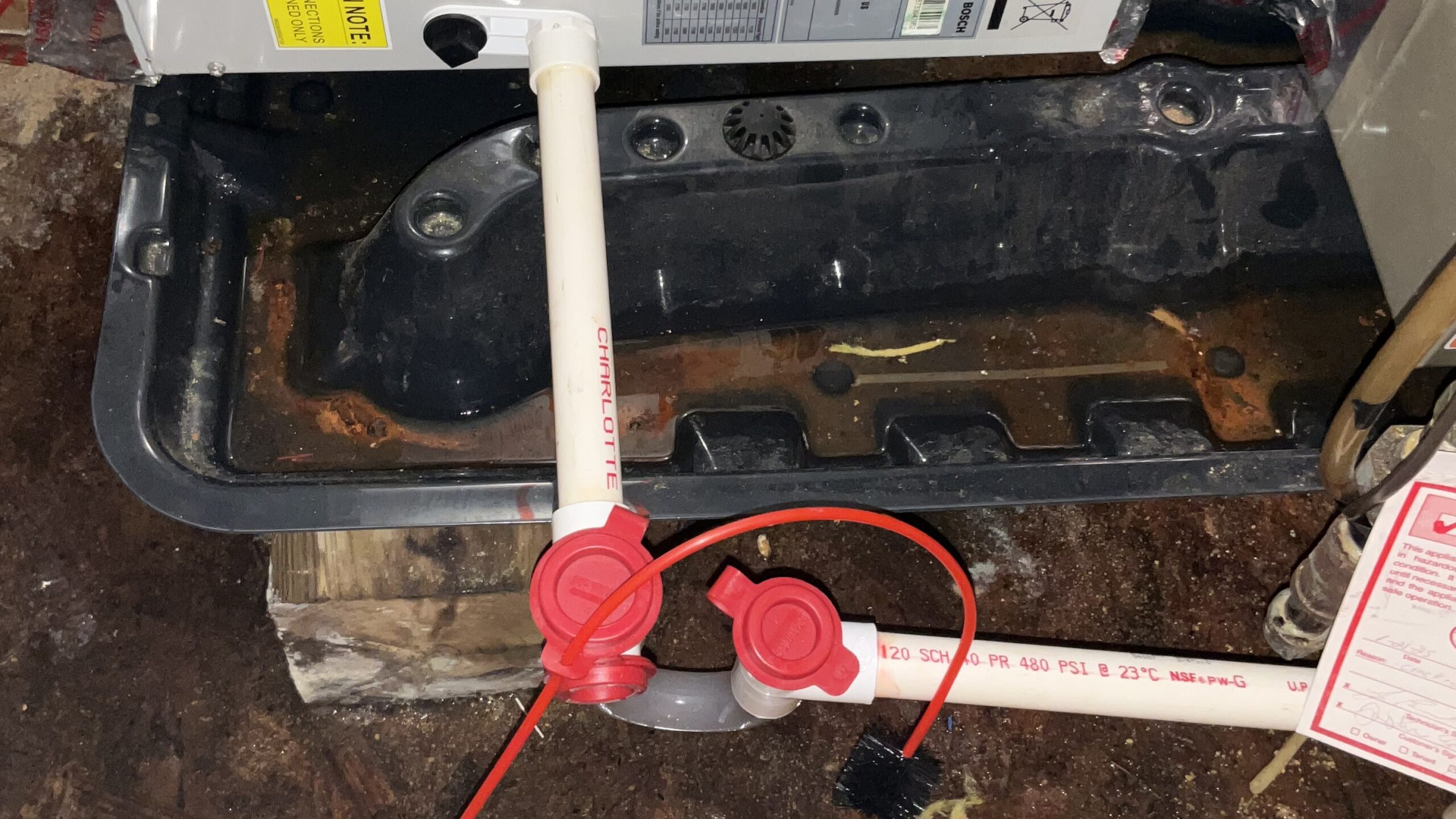
- Dust and debris: As your AC pulls air over the evaporator coil, tiny particles like dust, dirt, and pet dander can bypass the air filter and collect in the drain pan. When they mix with condensation, they can form a thick sludge.
- Algae or mold-like growth: The inside of the drain line is dark, damp, and often warm, which can allow slimy biofilm to build up along the pipe walls.
- Layered blockages: Over time, sludge and biological growth can catch more particles until water can’t drain properly.
When the line is blocked, condensation may back up and leak around the indoor unit instead of draining safely outside.
What Should Homeowners Check Before Peak Season?
Homeowners should check for early water signs, clean filters, clear airflow, and schedule AC maintenance before summer humidity builds.
Drain-line clogs can stay hidden until the system starts removing more moisture from the air. That is why spring and early-summer checks matter. In older Rhode Island and Massachusetts homes, air handlers may be located in basements, attics, closets, or tight mechanical spaces where small leaks are easy to miss.
Before peak season, homeowners should:
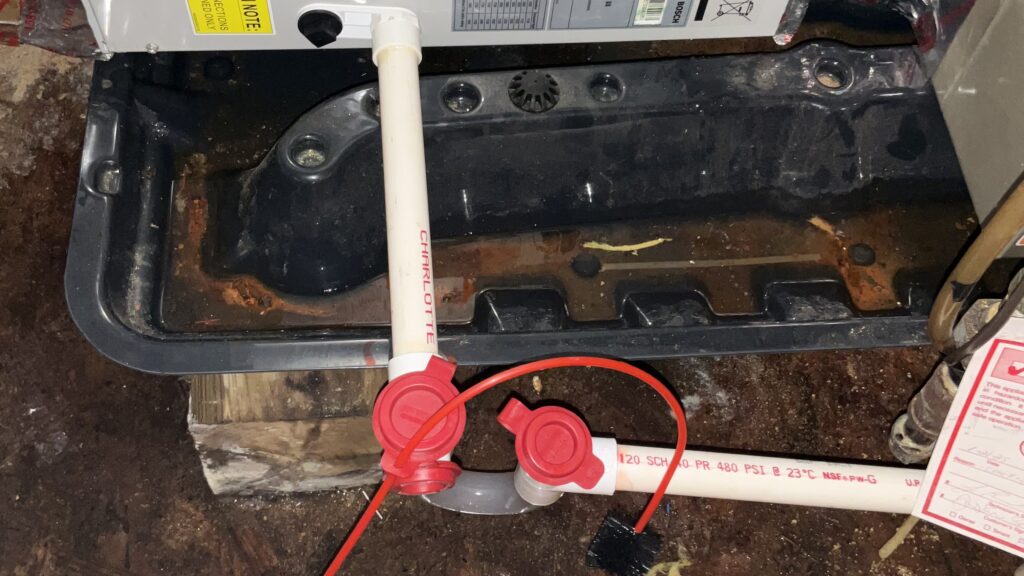
- Look around the indoor AC equipment for water stains, musty odors, rust around the drain pan, or signs of previous dripping.
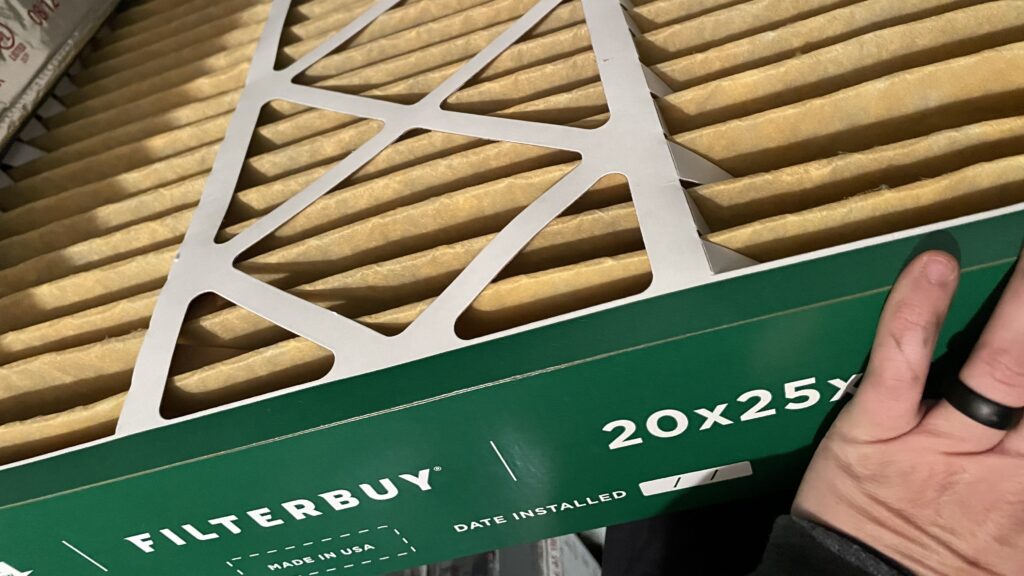
- Check the air filter and replace it if it is dirty or clogged.
- Make sure vents and returns are not blocked by furniture, rugs, or stored items.
- Schedule AC maintenance before heavy summer humidity puts more demand on the system.
A dirty filter can reduce airflow and contribute to coil problems, which can create more moisture and water symptoms around the system.
If your AC has leaked more than once, schedule AC repair in RI and MA before the next humid stretch
What Signs Mean Your HVAC System Needs Attention?
Your HVAC system needs attention when you see water near the indoor unit, a full drain pan, musty odors, higher indoor humidity, or an AC system that shuts off unexpectedly.
Common clogged AC drain line symptoms include:
- Water around the indoor air handler
- A wet ceiling, wall, floor, or utility area
- A full or overflowing condensate pan
- AC shutting off before the home reaches the set temperature
- Musty odors near vents or equipment
- Higher indoor humidity
- Water returning after a filter change
- Signs of algae or buildup near the drain outlet
Real talk: Water around AC equipment should be checked. A small leak can damage nearby floors, ceilings, walls, or equipment if it keeps returning.
What Can You Safely Check Before Calling?
You can safely check the filter, visible water, thermostat status, and whether the area around the indoor unit is safe to access. Do not open sealed panels, touch wiring, handle refrigerant, or pour chemicals into the drain line without professional guidance.
Here are a few safe first steps:
- Check the filter.
If it is dirty, replace it with the correct size and type. Reduced airflow can make AC problems worse and may lead to symptoms that look like a drain issue. - Look for visible water.
If water is spreading, turn the system off at the thermostat if it is safe to do so. Move items away from the area and protect nearby flooring. - Check the thermostat.
If the system has stopped cooling or the thermostat is blank, water may have triggered a safety switch, depending on the equipment design. That does not fix the clog, but it can be a sign that service is needed.
Safety note: Avoid chemical drain cleaners unless a technician or manufacturer specifically approves them for your system. AC condensate lines, drain pans, pumps, and nearby components are not the same as a sink or sewer drain.
When Should You Call a Professional?
Call a professional when water is actively leaking, the leak returns, the system shuts off, the drain pan looks full, or you cannot confirm the water source.
That’s where a pro comes in. A technician can check the full condensate system and related AC components, including:
- Condensate drain line
- Drain pan
- Float switch
- Condensate pump
- Evaporator coil
- Airflow
- Refrigerant performance
These checks matter because the visible symptom is water, but the cause may not be only the drain line.
Other causes of AC water leaks can include a frozen evaporator coil, cracked drain pan, failed condensate pump, disconnected drain piping, or airflow problems. A professional diagnosis helps separate a simple clog from a larger cooling-system issue.
When Should You Repair vs. Replace?
AC repair usually makes sense when the clog, drain pan, float switch, condensate pump, or drain connection can be corrected and the rest of the AC system is working well.
AC replacement becomes part of the conversation when:
- Leaks keep coming back
- The system is aging
- Repair needs are stacking up
- The AC is also struggling to cool the home
- Water issues are tied to larger performance problems
A clogged drain line by itself does not automatically mean the AC needs replacement.
The practical question is whether the water leak is a single maintenance issue or a sign of broader system trouble. For example, repeated leaks tied to coil freezing, poor airflow, or failing components may need a deeper repair-or-replace review.
What Affects HVAC Cost in Massachusetts and Rhode Island?
HVAC cost for an AC water leak depends on access, clog severity, drain pan condition, condensate pump condition, system layout, and whether the leak is tied to another AC problem.
Common cost factors include:
- Where the indoor equipment is located
- How easy or difficult the system is to access
- Whether the drain line is simply clogged or damaged
- The condition of the drain pan
- Whether a condensate pump is involved
- Whether the issue is connected to a frozen coil, airflow problem, or other AC repair need
A simple visible drain issue is different from a leak involving an attic air handler, failed pump, damaged pan, frozen coil, or finished ceiling. Access also matters. Tight basements in older Providence homes, coastal moisture near Narragansett Bay, and compact utility spaces in Massachusetts homes can affect service time.
The safest estimate is based on where the equipment sits, what is leaking, and whether related AC components need attention.
How Can You Prevent AC Drain Line Clogs Before Summer?
The best way to prevent AC drain line clogs is to keep the cooling system maintained, protect airflow, and respond early to moisture or odor near the indoor unit.
Professional maintenance can include checking the condensate drain, pan, coil, filter, and overall system operation.
Homeowners can help reduce the risk of clogs by:
- Replacing filters on schedule
- Keeping vents and returns open
- Watching for water near the indoor unit
- Paying attention to musty odors around vents or equipment
- Scheduling seasonal AC maintenance before peak cooling season
If your AC is already leaking, do not wait for the next cycle to see if it clears on its own. Schedule service with GEM so the drain line, pan, pump, airflow, and system condition can be checked together.
Bottom line: A clogged AC drain line is small, but the leak it causes can get noticed fast. GEM serves Rhode Island and Massachusetts homeowners with AC maintenance, repair, and replacement support.
Schedule AC service with GEM before peak summer heat hits
Frequently Asked Questions
Are drain line clogs in air conditioners an HVAC or plumbing issue?
Drain line clogs in air conditioners are usually an HVAC issue because the condensate drain line is part of the AC system. A plumbing handoff may be needed only if the blockage is in the home’s household drain piping rather than the AC condensate line.
Why is my AC leaking water?
Your AC may be leaking water because the condensate drain line is clogged, the drain pan is full, the condensate pump is not working, or the evaporator coil has frozen and melted. A technician should inspect the source because similar leaks can have different causes.
What are clogged AC drain line symptoms?
Clogged AC drain line symptoms include water near the indoor unit, a full drain pan, musty odors, higher indoor humidity, or an AC system that shuts off unexpectedly. These signs can become more noticeable during humid Rhode Island and Massachusetts summers.
Can a clogged AC drain line shut off my air conditioner?
A clogged AC drain line can shut off an air conditioner if the system has a safety switch that detects water backup. The shutoff helps limit overflow, but the clog or drainage problem still needs service.
What can I check before calling for an AC water leak?
Homeowners can check for visible water, a dirty filter, blocked vents, thermostat alerts, and whether the indoor-unit area is safe to access. Do not open sealed panels or attempt electrical, refrigerant, or internal drain repairs.
How do I prevent AC drain line clogs?
Preventing AC drain line clogs starts with regular air conditioning maintenance, clean filters, clear airflow, and early attention to musty odors or water near the indoor unit.
Is financing available for AC repairs or replacement?
GEM offers a variety of special financing options to suit your needs. Call to speak with a Home Comfort Advisor to learn more about financing for qualified applicants.