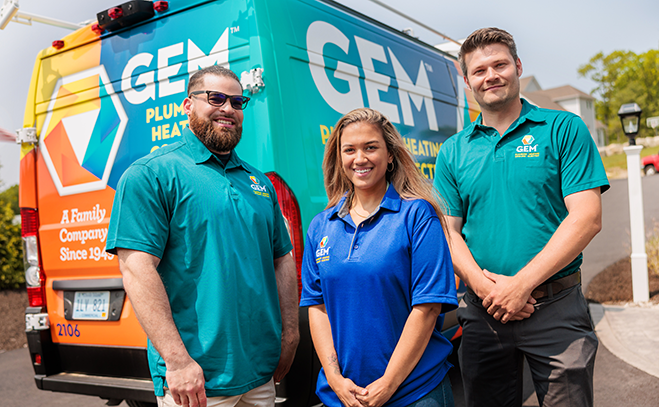

For facility managers, property managers, and business owners, the goal is simple: find small problems before they interrupt work, tenant comfort, customer visits, or daily operations. GEM provides a full range of commercial HVAC services for businesses in Rhode Island, Massachusetts, and Connecticut, and we pride ourselves on solving the problem the first time.
What should businesses check before peak cooling season?
Businesses should check airflow, thermostat schedules, equipment access, service history, and recent energy trends before the first stretch of hot weather.
Start with the basics your team can safely observe:
- Are some offices, retail areas, or tenant spaces warmer than others?
- Does the system run longer than usual?
- Are vents blocked by furniture, storage, boxes, or temporary displays?
- Do thermostats match the building’s operating schedule?
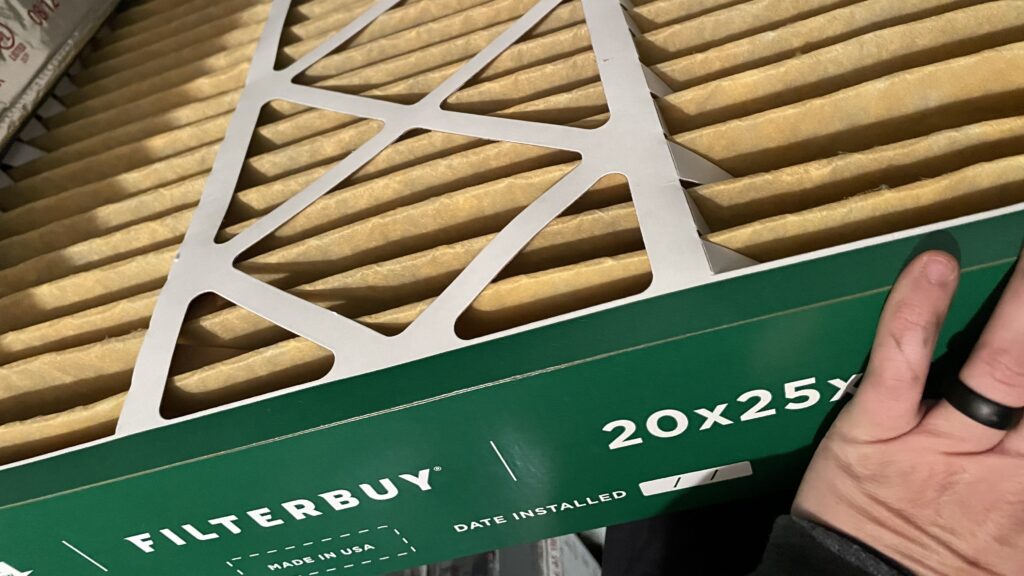
- Are filters overdue for replacement?
- Have utility bills climbed without a clear change in use?
In New England, spring weather can hide cooling issues. A building may feel fine in April, then struggle when humid summer air moves in from the coast or when older masonry and mixed-age building stock hold heat longer than expected.
High-efficiency heating and cooling is our specialty. Schedule service now to discuss your options with the GEM team
What signs mean your building may overheat this summer?
A building may overheat this summer if cooling is uneven, airflow feels weak, humidity rises indoors, or the system cannot keep up during normal business hours.
Common building overheating problems include:
- Hot and cold spots
Uneven temperatures can point to airflow, controls, duct, zoning, or equipment issues. - Poor airflow from vents
Weak airflow may be tied to clogged filters, blocked returns, fan problems, duct restrictions, or equipment condition. - Rising energy bills
If usage patterns have not changed, higher bills may suggest the system is running longer or operating less efficiently. - Humidity complaints
A commercial cooling system should help manage comfort during humid weather. Sticky indoor air can mean the system needs review. - Unusual sounds or vibration
New rattling, grinding, buzzing, or short cycling should be documented and checked. - Frequent service calls
Repeated repairs can be a sign that maintenance is no longer enough.
Bottom line: one symptom may not mean a major failure. A pattern of symptoms is the real warning sign.
What can facility teams safely check before calling?
Facility teams can safely document symptoms, check thermostat settings, inspect visible filters, clear blocked vents, and review maintenance records before calling.
Keep the checklist practical:
- Confirm thermostat schedules match building hours.
- Look for blocked supply and return vents.
- Check whether filters are visibly dirty or past the building’s replacement schedule.
- Note which areas are too warm and when the issue happens.
- Compare recent utility bills to similar operating periods.
- Record unusual noises, odors, or run-time patterns.
- Make sure roof, mechanical-room, and equipment access areas are clear for service.
Safety note: do not open electrical panels, handle refrigerant lines, bypass controls, or remove guarded equipment panels. That work belongs with a licensed commercial HVAC professional.
If your team needs a broader facilities partner, GEM can help. In addition to heating and cooling, GEM offers commercial services such as plumbing, drain cleaning, electrical, and more.
When should a business call a professional?
A business should call a commercial HVAC professional when comfort problems repeat, equipment runs constantly, utility bills rise, or safe basic checks do not solve the issue.
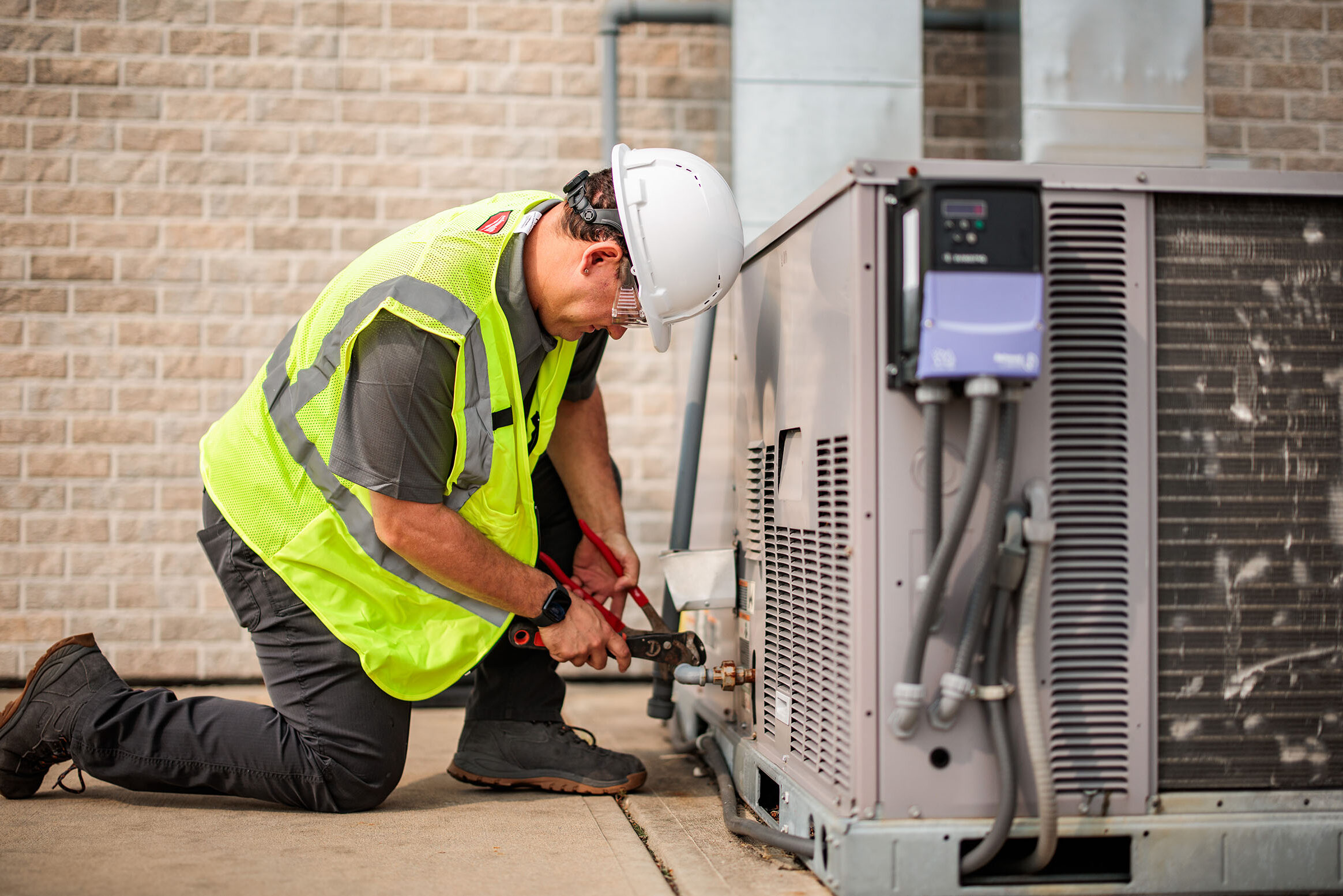
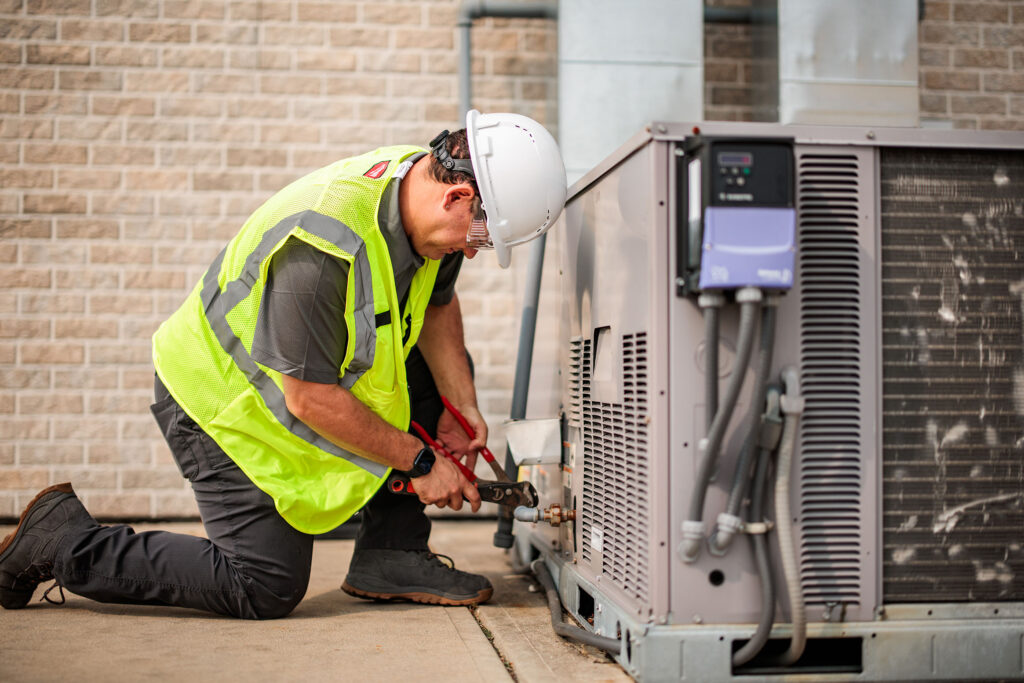
That’s where a pro comes in. Commercial HVAC systems often involve larger loads, multiple zones, roof units, ventilation needs, controls, and operating schedules. A technician can inspect the system, confirm airflow, review controls, check mechanical condition, and explain the likely next step in plain language.
Call sooner if:
- Employees, tenants, customers, or patients are uncomfortable.
- Cooling affects operations, storage, equipment, or safety-sensitive areas.
- One section of the building is consistently warmer.
- The system short cycles or runs without catching up.
- You hear new mechanical or electrical sounds.
- You are planning summer building maintenance or capital budgets.
When should a business repair vs. replace commercial HVAC equipment?
A business should compare repair and replacement when problems repeat, equipment is aging, comfort is inconsistent, or repair costs no longer support reliable operation.
Repair may make sense when:
- The issue is isolated.
- The system has been maintained.
- Parts are available.
- Comfort improves after service.
- The repair supports the building’s near-term use.
Replacement or upgrade planning may make sense when:
- Repairs are frequent.
- The equipment struggles during peak heat.
- The building has changed use, layout, hours, or occupancy.
- Utility bills keep rising.
- Controls, zoning, or ventilation needs have changed.
- The system is near the end of its practical service life.
For commercial properties, the decision is not just mechanical. It can involve budgets, tenant commitments, downtime windows, energy goals, and phased work. GEM HVAC technicians can provide facility teams with clear documentation so owners and finance teams can compare options.
What affects commercial HVAC cost in Massachusetts and Rhode Island?
Commercial HVAC cost depends on system type, building size, equipment access, controls, ductwork, ventilation needs, electrical requirements, and whether the project is repair, replacement, retrofit, or installation.
Useful cost drivers include:
- Building square footage and load requirements
- Number of zones or tenant spaces
- Rooftop, mechanical-room, or ceiling access
- Equipment age and parts availability
- Controls and scheduling needs
- Ductwork or airflow corrections
- Electrical or structural coordination
- Off-hour work needed to reduce business disruption
- Local permitting or inspection needs
- Equipment efficiency and rebate eligibility
In older Rhode Island, Massachusetts, and Connecticut commercial buildings, tight mechanical rooms, older controls, and mixed renovations can add complexity. Coastal properties may also face moisture and salt-air exposure, depending on location.
How can businesses plan before the first heat wave?
Businesses can plan by documenting symptoms now, scheduling an HVAC inspection, reviewing utility trends, and setting a repair-or-replace decision path before cooling demand peaks.
Here’s the process:
- Walk the building during occupied hours.
- Note hot spots, weak airflow, noise, and humidity concerns.
- Pull recent utility bills for comparison.
- Check maintenance records and last inspection date.
- Confirm operating schedules and thermostat settings.
- Identify any tenant, employee, or customer comfort complaints.
- Schedule commercial HVAC service before peak summer demand.
That planning gives your team better information. It also helps ownership decide whether a repair, maintenance visit, phased replacement, or larger capital plan is the right next step.
Ready to plan before heat hits? Schedule HVAC service with GEM today
Frequently Asked Questions
What are the warning signs that a commercial HVAC system needs maintenance?
Commercial HVAC maintenance may be needed when a building has uneven temperatures, weak airflow, rising energy bills, unusual noises, humidity complaints, or long run times. In Rhode Island, Massachusetts, and Connecticut, humid summer weather can make these issues more noticeable. Document where and when symptoms happen before scheduling service.
What can facility teams check before scheduling commercial HVAC service?
Facility teams can safely check thermostat schedules, blocked vents, visible filter condition, comfort complaints, equipment access, and recent utility bill trends before scheduling commercial HVAC service. Do not open electrical panels, handle refrigerant lines, or bypass controls.
When should a business repair or replace commercial HVAC equipment?
A business should compare commercial HVAC repair and replacement when repairs repeat, comfort problems continue, energy use rises, or the system no longer supports the building’s hours or occupancy. The right path depends on equipment condition, access, controls, and operating needs.
Does GEM provide commercial HVAC service in Rhode Island and Massachusetts?
GEM provides commercial HVAC services for businesses in Rhode Island, Massachusetts, and Connecticut. Businesses can request service or a site visit to discuss inspection, repair, replacement, and installation needs.